








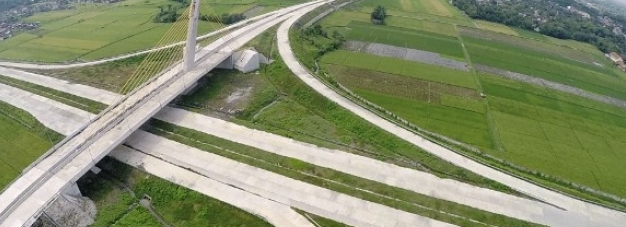
In an era where rapid economic growth demands world-class facilities, governments face a complex dilemma: how to finance massive infrastructure projects without crippling the national budget. For a rapidly developing nation like Indonesia, relying solely on the State Budget (APBN) to fund every toll road, power plant, and water supply system is no longer a viable or realistic strategy. Bridging this enormous funding gap requires innovative financing models that not only mobilize private capital but also systematically distribute responsibilities. This is where a well-structured public private partnership becomes the cornerstone of modern economic development. By collaborating with the private sector, the government can deliver essential public services efficiently while maintaining strict fiscal prudence and protecting the broader economy from unexpected financial shocks.
The Core Challenge: Infrastructure Needs vs. Fiscal Limitations
Indonesia has set highly ambitious targets to transition into a globally competitive, developed nation. To achieve this, the country requires thousands of kilometers of new toll roads, modernized ports, renewable energy facilities, and comprehensive waste management systems. However, the financial reality is stark. Based on historical data and National Medium-Term Development Plan (RPJMN) projections, the government’s state budget can typically cover only about 30% to 40% of the total infrastructure funding requirements.
If the government attempts to shoulder this burden alone by acquiring excessive debt, it risks destabilizing the macroeconomic environment. High levels of direct government borrowing can lead to inflated interest rates, currency volatility, and an overwhelming debt-servicing burden that detracts from other critical sectors like education, healthcare, and social welfare. Consequently, attracting private investment is not just an alternative option; it is an absolute macroeconomic necessity.
However, inviting the private sector to build public goods introduces a new layer of complexity: state fiscal risk. When the government signs long-term contracts with private entities, it inherently takes on future financial obligations that must be meticulously managed.
Understanding Contingent Liabilities in the APBN
To truly grasp how fiscal risk operates within infrastructure development, one must understand the concept of contingent liabilities. Unlike direct debt—where the government borrows a specific amount of money and agrees to a fixed repayment schedule—a contingent liability is a potential financial obligation that only materializes if a specific, uncertain future event occurs.
In large-scale infrastructure projects, contingent liabilities often arise from government guarantees. For example, if a private consortium builds a toll road, the government might guarantee that land acquisition will be completed by a specific date, or that tariff adjustments will be granted according to inflation. If the government fails to acquire the land on time, or if political pressure prevents a necessary toll tariff increase, the private investor suffers a financial loss. The guarantee contract then forces the government to compensate the investor for that loss.
If left unmonitored, an unmanaged contingent liability is a ticking time bomb hidden deep within the state’s financial vault (Metaphor). A sudden accumulation of these claims, triggered by an unforeseen political shift or regulatory failure, could detonate without warning, causing a severe, immediate shock to the APBN. This is the exact scenario that fiscal prudence aims to prevent.
The Mechanics of Risk Allocation
The genius of the collaborative procurement model lies in its ability to allocate risks rather than simply absorbing them. In conventional public procurement, the government bears 100% of the project risks, ranging from construction delays and budget overruns to poor operational maintenance.
Under a collaborative framework, risks are strategically transferred to the party best equipped to mitigate and manage them:
- Commercial and Construction Risks: The private sector assumes the risks associated with the physical building of the asset. If the construction goes over budget due to poor planning or supply chain issues, the private developer absorbs the loss. Similarly, the private sector is responsible for maintaining the asset to a predetermined standard over the life of the concession.
- Political and Regulatory Risks: The government retains the risks that it directly controls. These include the risk of expropriation, changes in legislation, delays in issuing necessary permits, and failures to integrate the project into the broader national grid or network.
- Demand Risks: Depending on the sector, demand risk (e.g., how many cars will actually use a toll road) can be shared, fully transferred to the private sector, or retained by the government through an “availability payment” scheme, where the private sector is paid simply for keeping the infrastructure available and functioning perfectly, regardless of public usage.
By allocating risks efficiently, the government ensures that projects are completed faster and maintained better, fundamentally shifting the focus from merely “buying physical assets” to “purchasing long-term, high-quality public services.”
Enhancing Project Bankability
Despite the logical appeal of risk sharing, foreign and domestic investors remain inherently risk-averse when dealing with public infrastructure. Developing nations often face stigmas regarding regulatory uncertainty and bureaucratic bottlenecks. Even if a project boasts excellent financial projections, a commercial bank will refuse to finance it if they believe the government might default on its contractual obligations or arbitrarily change the rules of the game midway through a 20-year concession.
To make a project “bankable”—meaning it is structured soundly enough to secure financing from major commercial lenders—the private sector requires absolute certainty. They need a watertight guarantee that political and regulatory risks are covered. However, providing direct guarantees from the Ministry of Finance creates a direct exposure to the APBN, reigniting the threat of sudden fiscal shocks.
Institutional Safeguards: Ring-Fencing Fiscal Exposure
To solve the paradox of needing to provide guarantees while simultaneously protecting the state budget, the Indonesian government implemented a sophisticated institutional safeguard. Instead of issuing direct guarantees from the Ministry of Finance, the government established an independent Special Mission Vehicle (SMV) dedicated entirely to managing infrastructure guarantees.
By routing all guarantees through a single institutional window, the government achieves a critical financial objective known as “ring-fencing.” Ring-fencing isolates the financial exposure of infrastructure projects from the broader national budget. If a contingent event occurs and a private developer files a legitimate claim for compensation, the claim is not paid directly out of the APBN. Instead, it is absorbed by the guarantee institution’s dedicated capital reserves.
This mechanism acts as a robust shock absorber. It provides the private sector and their lenders with the ironclad confidence they need to deploy billions of dollars in capital, knowing an independent, well-capitalized entity stands ready to honor the government’s commitments. Simultaneously, it allows the Ministry of Finance to sleep soundly, knowing that the country’s fiscal health is protected from sudden, catastrophic infrastructure claims.
Furthermore, this institutional setup forces better project preparation. Because the guaranteeing entity puts its own capital on the line, it acts as a stringent gatekeeper. It conducts rigorous feasibility studies, ensures risk allocations are fair, and demands transparency before approving any project. This dramatically elevates the quality of infrastructure planning across all government ministries and regional agencies.
Real-World Impact and Industry Trends
This meticulous approach to fiscal risk management has yielded tangible, transformative results across Indonesia. Today, this ecosystem supports a diverse portfolio of critical projects spanning telecommunications (like the Palapa Ring broadband project), transportation (such as the Trans-Java Toll Road network), power generation (like the massive Batang Power Plant), and essential utilities (including various Drinking Water Supply Systems or SPAM).
A notable industry trend is the increasing application of these guarantees to sustainable and ESG-compliant (Environmental, Social, and Governance) projects. A prime example is the Legok Nangka Integrated Waste Processing and Final Disposal Facility (TPPAS) in West Java. By utilizing this structured financing and guarantee mechanism, the government is not only solving an urgent regional waste crisis but also attracting green financing and promoting a sustainable environmental transformation.
These projects prove that when fiscal risks are managed with foresight and institutional discipline, the private sector is more than willing to bring its capital and efficiency to the table. The focus remains squarely on delivering high-quality outputs—clean water flowing 24/7, uninterrupted electricity, and smooth logistics networks—while keeping the country’s balance sheet healthy.
Conclusion
Managing state fiscal risk is an intricate balancing act between the urgent need for national development and the absolute necessity of financial prudence. Relying solely on the state budget limits growth, but reckless borrowing jeopardizes the future. By leveraging private capital, transferring commercial risks to developers, and meticulously managing contingent liabilities through a dedicated institutional framework, Indonesia has successfully cracked the code of sustainable infrastructure growth. This disciplined approach ensures that the nation can build the foundation for tomorrow’s economy without mortgaging its financial stability today. To learn more about how to structure bankable projects, mitigate political risks, and secure robust government guarantees for your next infrastructure venture, contact PT PII.








+ There are no comments
Add yours